
Regulation of acetyl-CoA synthesis
Downloads: GraphML SBGN-ML SBML CellDesigner MINERVA Newt Annotation
Contributors
Adrien Rougny, John Albanese
Description
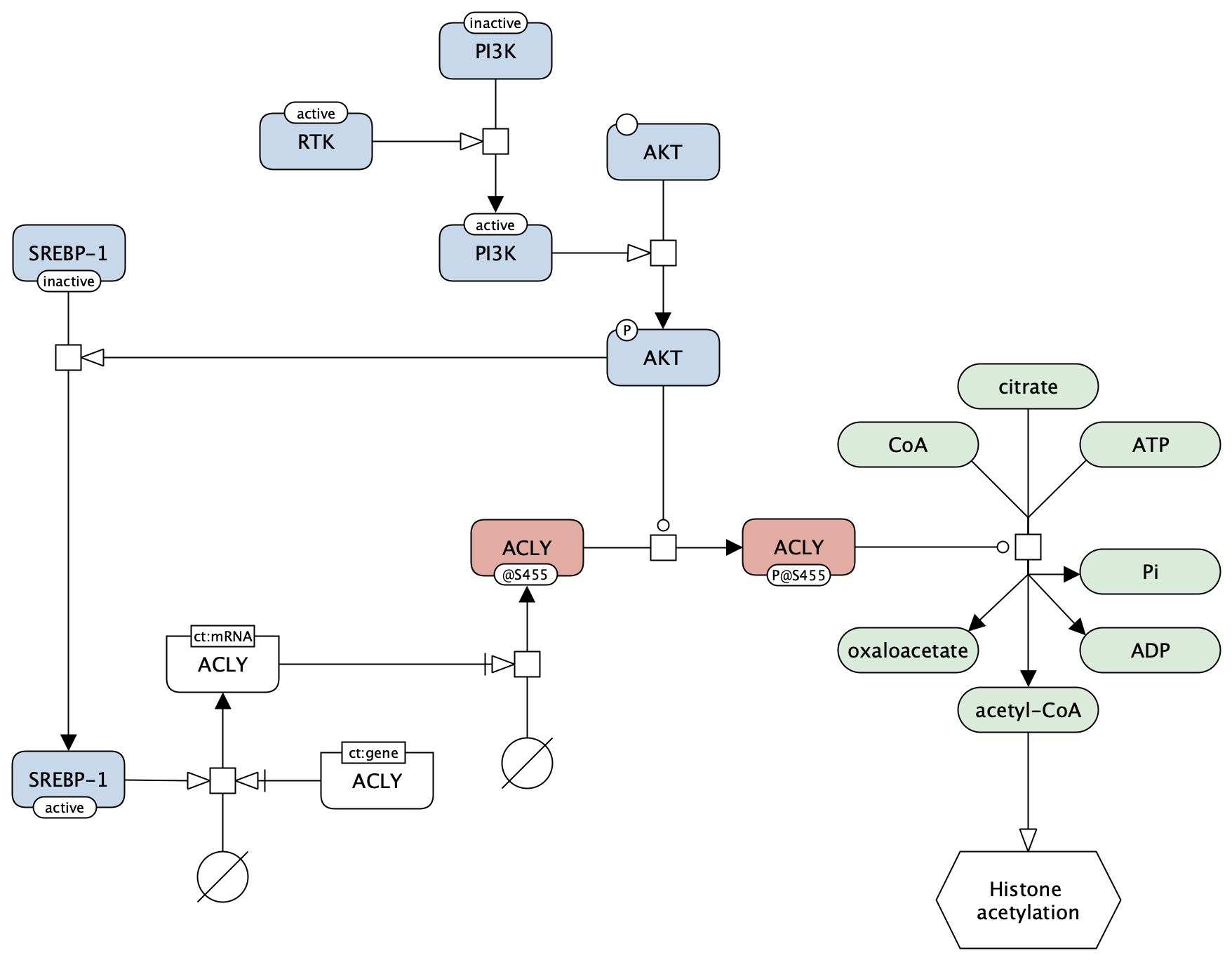
ATP citrate lyase (ACLY) catalyses the transformation of citrate, which is an intermediary product of the metabolism of carbohydrates, into acetyl-CoA. Acetyl-CoA plays a major role in the fatty acid synthesis pathways, but also in gene expression, through the acetylation of histones. Hence, ACLY (i) serves as a bridge between carbohydrate and fatty acid metabolism, and (ii) is a key player in the regulation of gene expression, in particular the one mediated by glucose availability.
References
- Horton JD, Goldstein JL, Brown MS. SREBPs: activators of the complete program of cholesterol and fatty acid synthesis in the liver. J Clin Invest. 2002 May;109(9):1125-31. doi: 10.1172/JCI15593. PMID: 11994399.
- Lee JV, Carrer A, Shah S, Snyder NW, Wei S, Venneti S, Worth AJ, Yuan ZF, Lim HW, Liu S, Jackson E, Aiello NM, Haas NB, Rebbeck TR, Judkins A, Won KJ, Chodosh LA, Garcia BA, Stanger BZ, Feldman MD, Blair IA, Wellen KE. Akt-dependent metabolic reprogramming regulates tumor cell histone acetylation. Cell Metab. 2014 Aug 5;20(2):306-19. doi: 10.1016/j.cmet.2014.06.004. PMID: 24998913.
- Wellen KE, Hatzivassiliou G, Sachdeva UM, Bui TV, Cross JR, Thompson CB. ATP-citrate lyase links cellular metabolism to histone acetylation. Science. 2009 May 22;324(5930):1076-80. doi: 10.1126/science.1164097. PMID: 19461003.